
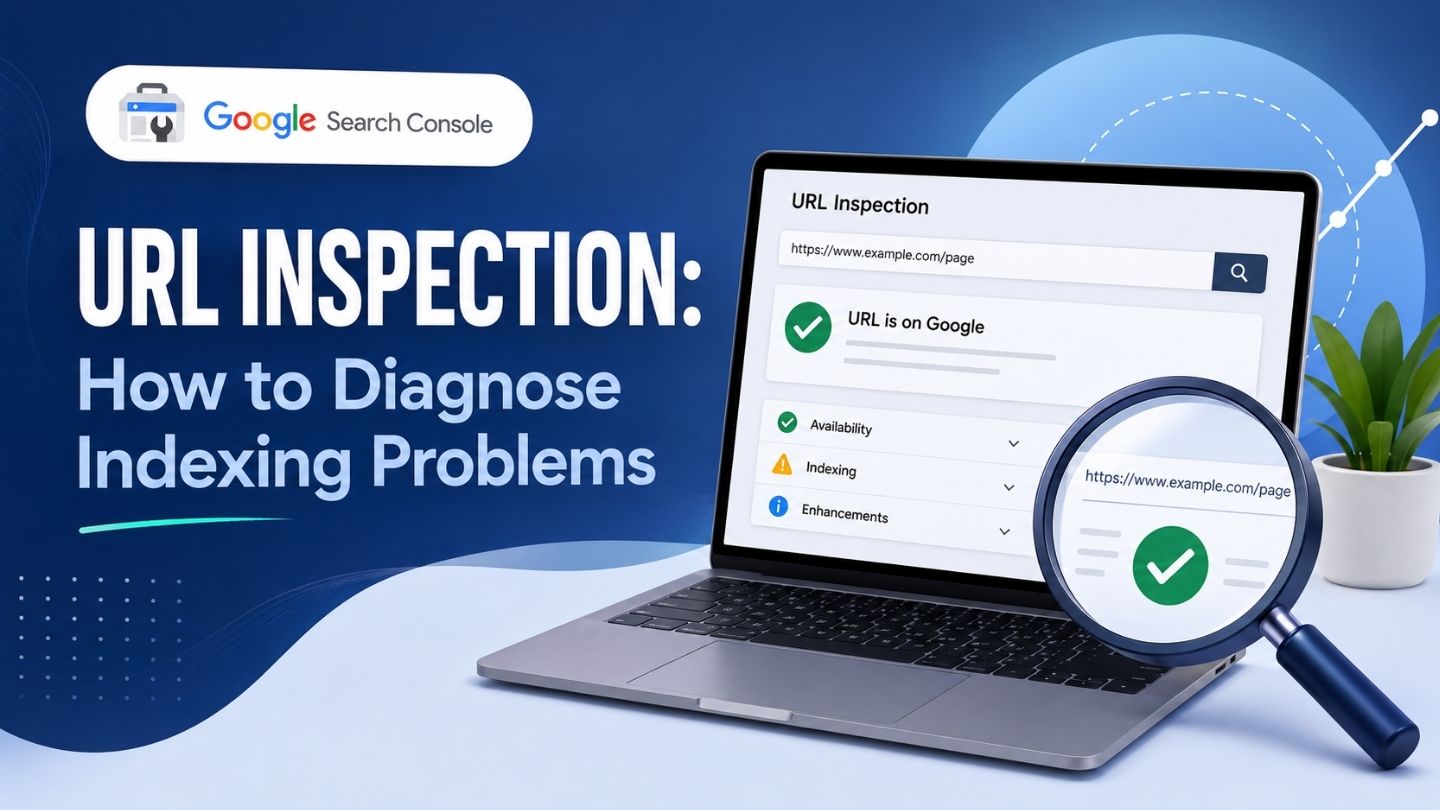
A page not showing up in search results could mean a dozen different things: blocked by robots.txt, never discovered, crawled but not indexed, indexed but suppressed, and guessing wastes time you don’t need to spend. The URL Inspection tool inside Search Console gives you the actual diagnosis directly from Google rather than a guess, provided you know how to read what it’s telling you. This blog covers how to use URL Inspection systematically to diagnose indexing problems and what each status actually means for what to do next.
Key Takeaways
- URL Inspection shows Google’s actual view of a page, not an inference.
- Different failure statuses require completely different fixes.
- The live test and the indexed version can disagree in revealing ways.
- Requesting indexing helps but doesn’t guarantee or speed up a fix.
- Bulk indexing problems need root-cause diagnosis, not one-by-one requests.
Why Guessing at Indexing Problems Wastes Time
A page missing from search results has several possible causes that look identical from the outside but require completely different fixes. It might never have been discovered because nothing links to it. It might be discovered but blocked from crawling. It might be crawled but excluded from the index due to a technical issue. Or it might be indexed and simply not ranking well enough to appear for the queries you’re checking, which isn’t an indexing problem at all.
Without checking directly, teams often apply the wrong fix, requesting indexing repeatedly on a page that’s actually blocked by robots.txt, for instance, which does nothing because the underlying block was never addressed. URL Inspection removes the guessing by showing you Google’s actual recorded status for that specific URL, which is the correct starting point before attempting any fix.
Reading the Coverage Status Correctly

The tool reports a specific status, and each one points toward a different category of fix. “Submitted and indexed” means the page is fine from an indexing standpoint, and any visibility problem you’re experiencing is a ranking issue rather than an indexing one, which needs a completely different diagnosis than what this tool covers. Many of the underlying causes trace back to URL parameter issues that create duplicate content and crawling problems, which is worth ruling out early in any indexing investigation.
“Discovered, currently not indexed” typically signals a crawl budget or quality perception issue; Google knows the page exists but hasn’t prioritized indexing it, often because the site has many similar pages competing for attention or the page itself doesn’t clearly justify the crawl. “Crawled, currently not indexed” is a step further along and often signals a quality assessment issue after Google actually processed the content. Each status points toward genuinely different next steps, and treating them all the same wastes effort on the wrong fix.
Building This Check Into Your Deployment Process
Rather than discovering an accidental noindex tag or blocking directive after it’s been live for weeks, running a quick live test on key pages as a standard step immediately after any significant deployment catches these regressions while they’re still hours old rather than a forgotten problem discovered during a routine audit much later.
This is a small addition to a deployment checklist that pays for itself the first time it catches a genuine accidental block before it costs meaningful visibility, and it’s considerably cheaper to build into the process upfront than to add reactively after a significant indexing incident has already happened.
Using the Live Test to Catch Recent Changes
The live test option checks the URL’s current state in real time, separate from Google’s last recorded crawl, which is particularly useful after you’ve made a fix and want to confirm it worked before waiting for a full recrawl to happen naturally. A live test showing the page is now indexable, when the recorded status still shows a problem, confirms your fix worked and you’re just waiting on Google’s schedule to catch up.
Where this gets genuinely revealing is when the live test and the indexed version disagree in the other direction: the live test reveals a problem, like a noindex tag or a blocking directive, that wasn’t present when Google last crawled the page. That discrepancy tells you something changed recently, possibly unintentionally: a deployment that accidentally added a noindex tag, a robots.txt update that overreached. Catching that gap early prevents a much larger problem from accumulating unnoticed.
Check Rendered HTML, Not Just Status
The tool shows you what Google actually rendered, which sometimes reveals that content you can see in a browser isn’t rendering the same way for Google’s crawler- a JavaScript issue invisible from normal browsing but directly affecting indexing.
When Requesting Indexing Actually Helps
Requesting indexing after fixing a genuine problem- a corrected noindex tag, a resolved crawl block, or newly published content- can speed up Google noticing the fix rather than waiting for the next scheduled crawl. It’s a legitimate tool for exactly that situation: a real fix that needs Google to notice sooner rather than later. Sites that have recently gone through a website migration should pay particular attention here, since migrations are one of the most common triggers for this exact category of indexing problem.
It’s not a fix in itself, and requesting indexing repeatedly on a page with an underlying, unaddressed problem accomplishes nothing beyond using up a limited daily quota of requests. If a page keeps returning the same non-indexed status after a request and some waiting time, the actual cause hasn’t been addressed yet, and repeating the request won’t change that. Go back to diagnosing the root cause instead.
Diagnosing Patterns Across Many Pages
Checking individual URLs one at a time works for isolated problems and becomes impractical when a whole section of a site is affected. For bulk issues, the Coverage report at the property level, rather than URL Inspection at the individual page level, shows patterns: a specific directory consistently excluded, a template-wide issue affecting every page built from it, which points toward a systemic cause rather than a page-specific one.
This is where diagnosis needs to shift from individual URL checking to root-cause investigation: a shared template issue, a sitewide crawl budget problem tied to overall site quality signals, or a technical misconfiguration affecting a whole section. Reviewing the difference between crawling and indexing is useful groundwork here, since bulk problems often trace back to a misunderstanding of which of these two stages is actually failing.
Building a Habit Around This Tool
URL Inspection is most useful as a routine check rather than something reached for only during a crisis. Spot-checking key pages periodically, particularly after site changes, migrations, or template updates, catches indexing problems while they’re small and isolated rather than after they’ve compounded across a whole site section and become considerably harder to unwind.
Build it into your regular technical review rather than treating it as an emergency tool. A quick check of your most important pages once a month, alongside a Coverage report review for any concerning patterns, catches the majority of indexing problems early enough to fix cheaply, which is a much better position than discovering a sitewide issue months after it started quietly costing you visibility.
Documenting What You Find for Future Reference

Indexing issues have a habit of recurring in slightly different forms: a template change reintroduces a noindex tag, a plugin update alters robots directives unexpectedly. Keeping a simple record of past indexing problems, what caused them and how they were resolved, turns each incident into institutional knowledge rather than a one-off fire that gets fully forgotten once it’s fixed.
This record becomes genuinely valuable the second or third time a similar symptom appears, since checking whether it matches a past incident is often faster than re-diagnosing from scratch. A small internal wiki page or shared document tracking this, updated each time something significant comes up, pays for itself the first time it saves a repeat investigation.
Diagnosing Before You Fix
URL Inspection turns an indexing problem from a guessing game into a direct diagnosis, and using it well means reading the specific status correctly, checking the live test against the recorded version, and knowing when requesting indexing actually helps versus when it’s masking an unaddressed root cause. For bulk issues, step back to the Coverage report rather than checking pages one at a time. Built into a regular routine, this single tool catches most indexing problems while they’re still small and cheap to fix.
At The Ocean Marketing, we help businesses build SEO processes that catch technical problems before they cost real visibility. Whether you need help diagnosing a current indexing issue, building a regular technical review process, or a free SEO audit to see where your site currently stands, our team can help. Contact us and let’s find out exactly what’s happening with your pages.