
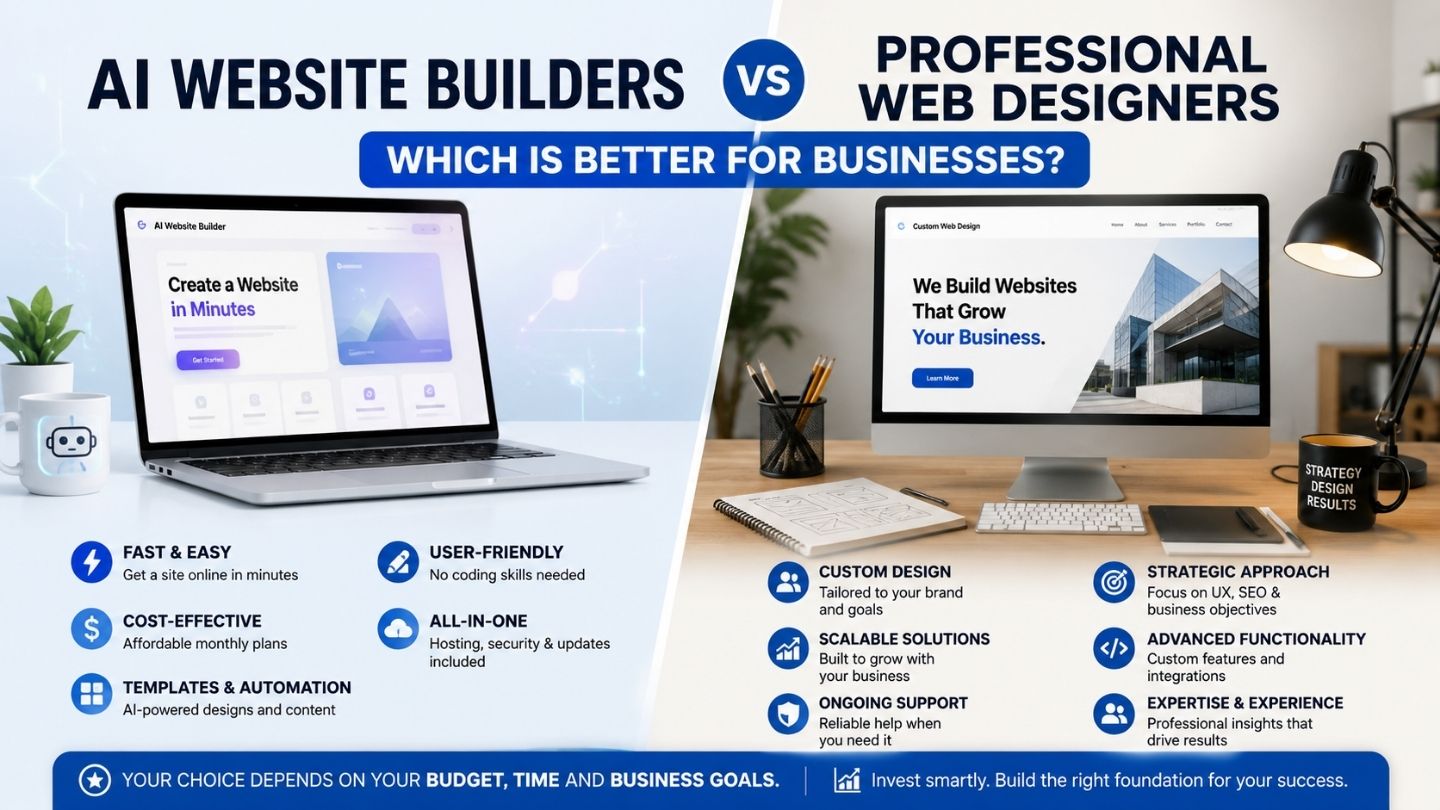
AI website builders can now produce a passable-looking site in minutes from a short prompt, which raises a genuine question for any business weighing the cost of a professional designer against a tool that promises the same result for a fraction of the price and time. The honest answer depends entirely on what “the same result” actually needs to include. This blog covers what AI builders genuinely do well, where they consistently fall short of a professional outcome, and how to decide which fits your business right now.
Key Takeaways
- AI builders excel at speed and low-cost baseline sites.
- Professional designers still win on strategy, conversion, and genuine differentiation.
- Template-based AI output often looks similar across many businesses.
- The right choice depends on stakes, not just budget.
- A hybrid approach- AI for structure, human refinement- is increasingly common.
Where the Line Between the Two Options Keeps Shifting
It’s worth acknowledging that the gap between AI builder output and professional design work is narrowing over time as the underlying tools improve, which means any specific comparison risks going stale within a year or two. What’s likely to remain stable longer is the underlying principle: tools handle baseline competence increasingly well, and genuine strategic differentiation continues to require human judgment regardless of how sophisticated the generation technology becomes.
Revisiting this decision periodically, rather than treating an initial assessment as permanent, makes sense given how quickly the tooling landscape shifts. A gap that felt significant eighteen months ago may have narrowed considerably, and a business that ruled out AI builders early might find the current generation of tools genuinely sufficient for needs that have since become simpler rather than more complex.
What AI Builders Genuinely Do Well
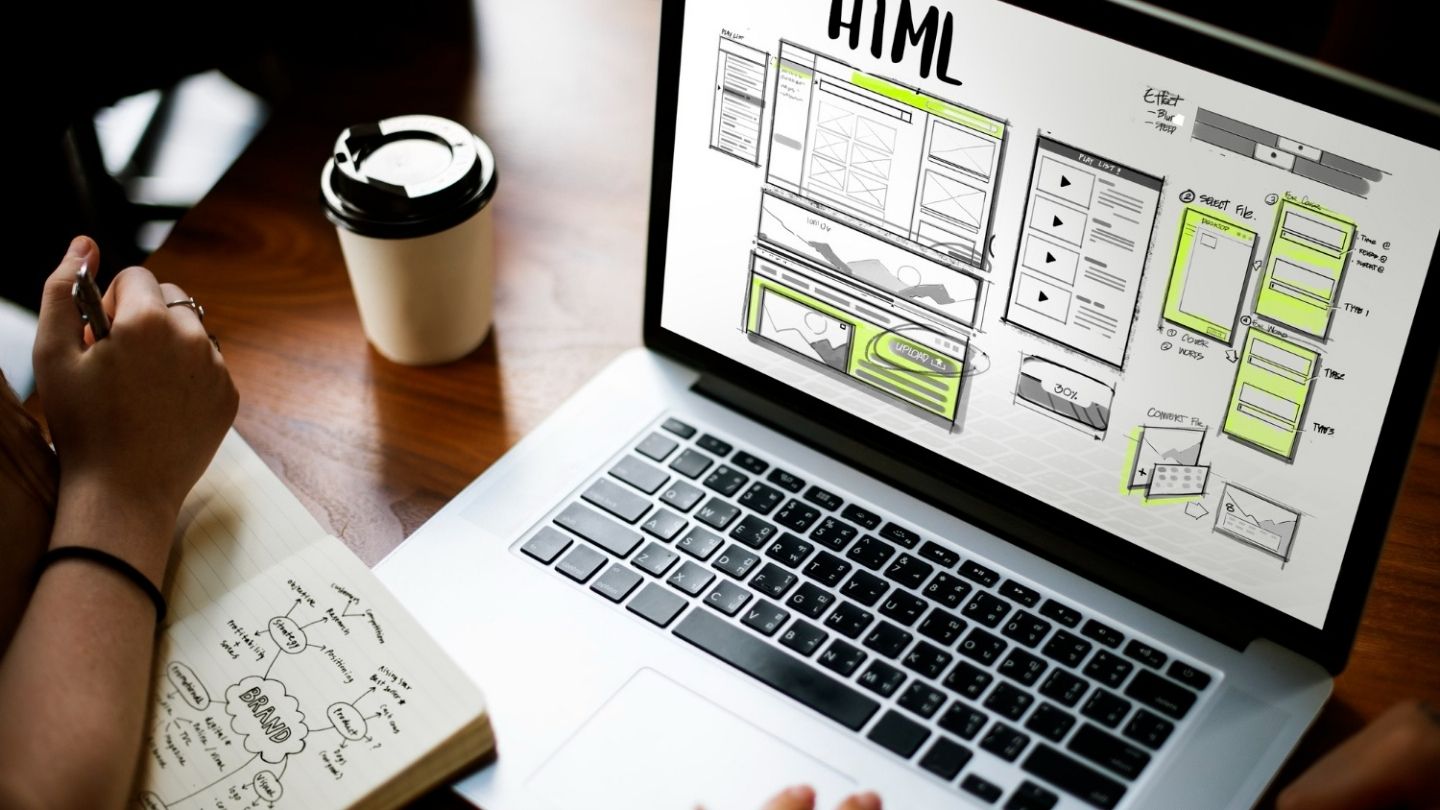
Speed is the obvious strength, and it’s real. A business needing a basic online presence, hours, contact information, and a simple service list can go from nothing to a functioning site in an afternoon, which used to take weeks with a traditional design process. For businesses with minimal budget and straightforward needs, that speed and cost advantage is significant and shouldn’t be dismissed.
They’re also genuinely good at handling the technical baseline competently: reasonably clean code, responsive layouts that work across devices, and basic accessibility defaults built into the templates. A decade ago, a cheap DIY site often meant a genuinely broken mobile experience. AI builders have mostly solved that baseline problem, which raises the floor considerably even if it doesn’t raise the ceiling.
Where the Output Starts Looking the Same
The tradeoff for that speed is that AI builders draw from a limited set of underlying templates and design patterns, and the more businesses use the same tool, the more their sites start resembling each other in structure, layout, and visual choices, even with different colors and content dropped in. A visitor who’s seen a few AI-built sites starts recognizing the pattern, which undermines the sense of a distinct, considered brand.
This matters more for some businesses than others. A straightforward local service business competing mainly on being findable and functional may not suffer much from this similarity. A business trying to differentiate in a crowded, competitive market, where visual distinctiveness is part of the pitch, loses something real when its site looks interchangeable with three competitors who used the same builder.
What a Professional Designer Actually Adds
The gap isn’t primarily about visual polish; current AI output can look genuinely clean. It’s about strategy underneath the visuals, understanding your specific customer’s decision process and building the site’s structure and content flow around actually moving them through it, rather than filling a generic template with your business’s specific words. This strategic layer is the same value covered in custom website design versus templates, and what Google actually prefers: structure built around your specific customer beats a generic template every time.
A professional designer asks questions an AI prompt doesn’t reliably surface: what’s the actual objection your prospects have before converting, what does your competitive landscape genuinely look like, what has and hasn’t worked for similar businesses in your specific market. That strategic layer is where conversion rate, not just visual appeal, gets built, and it’s the piece that’s hardest for a templated tool to replicate regardless of how sophisticated the underlying AI becomes.
Conversion Optimization Is Where the Gap Widens Most
AI builders can produce an attractive page. Getting that page to actually convert at a strong rate typically requires iterative testing and judgment calls that a one-shot generation process doesn’t include.
The Cost Comparison Isn’t Just the Upfront Number
AI builders win decisively on upfront cost, often by an order of magnitude. What that comparison misses is the ongoing cost of a site that doesn’t convert as well, or that needs significant rework once the business has grown past what a template could reasonably support. A cheaper site that converts two percent worse than a strategically built one can cost considerably more over a year than the upfront savings suggested.
This doesn’t mean AI builders are a false economy universally; for a genuinely simple, low-stakes site, the ongoing cost difference may be negligible. It does mean the comparison needs to include more than the initial invoice, particularly for any business where the website is a primary driver of leads or sales rather than a digital business card.
Matching the Tool to the Stakes
A straightforward local business with modest competition and a simple offering can reasonably use an AI builder and get a perfectly functional result. A business competing in a crowded market, selling something considered expensive, or relying heavily on its site as the primary conversion channel, has more to lose from a generic, unstrategic site and more to gain from professional work that genuinely differentiates and converts.
This connects to broader thinking about common web design mistakes small businesses make, since a rushed, template-driven site, whether built by an inexperienced designer or an AI tool, tends to fall into the same predictable traps: generic messaging, unclear calls to action, and structure that doesn’t match how customers actually decide.
The Hybrid Approach Gaining Ground

Increasingly, the sensible middle ground isn’t choosing exclusively between AI and professional design; it’s using AI tools to rapidly generate structural options and content drafts, then having a professional designer refine, strategize, and polish the result rather than building from a completely blank page. This captures much of the speed benefit while still applying real strategic judgment to the parts that actually move conversion. Reviewing conversion-focused homepage design strategies is a good next step once the structural groundwork, AI-assisted or not, is in place.
This shifts what a design engagement looks like rather than eliminating the need for one. The designer’s time goes toward strategy, conversion optimization, and genuine differentiation, rather than the more mechanical parts of initial layout and structure, which AI tools now handle reasonably well as a starting point. Teams comfortable with this hybrid workflow often get a stronger result faster than either pure approach alone.
Revisiting the Decision as the Business Grows
A decision that made sense at launch- an AI builder for a brand new, unproven business testing an idea- may no longer fit once that business has grown, established a real customer base, and has more riding on the site’s ability to convert and differentiate. Treating the initial choice as permanent rather than revisiting it periodically means some businesses outgrow their site quietly, without ever deciding to upgrade.
A useful trigger for revisiting: once the site is a meaningful contributor to revenue rather than a background presence, it’s worth reassessing whether the original tool still matches the stakes. What was the right call for a five-person startup testing an idea is often not the right call for the same business two years and real customer volume later.
Choosing Based on What Your Site Actually Needs to Do
AI website builders and professional designers aren’t really competing for the same job once you look past the surface comparison; one optimizes for speed and baseline competence, the other for strategy, differentiation, and conversion. Match the choice to what’s actually riding on the site working well: a simple informational presence versus a primary revenue channel, rather than defaulting to whichever option has the lower sticker price.
At The Ocean Marketing, we build website design that combines efficient production with the strategic thinking a template alone can’t provide. Whether you’re weighing an AI builder against a professional build, want a hybrid approach that captures both, or need a free SEO audit to see how your current site performs, our team can help. Contact us and let’s figure out what your site actually needs to accomplish.